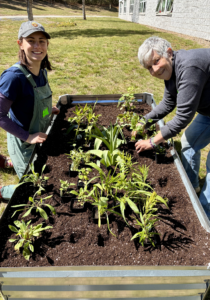
As my AmeriCorps Cape Cod year of service comes to an end, I am grateful for all of the experiences that I have gained through my individual placement with the Friends of the Mashpee National Wildlife Refuge. My supervisor, Lucinda Keith, and all the members of the Friends’ Board have helped me to grow professionally and as a person since starting with them in late October. While I was only with the Friends one day a week, we were able to accomplish so many projects that benefitted the Mashpee and Falmouth communities. Through this experience, I was able to bring environmental education to a variety of audiences, from second grade classrooms to senior center lecture halls and everyone in between.
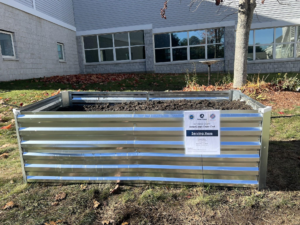 My time with the Friends of MNWR began with jumping right into meaningful projects. On my second IP day, I helped to install a “lasagna” garden at KC Coombs elementary school in Mashpee. These types of gardens are built by utilizing natural waste products and layering them to create nutritious soil, which is why they are called “lasagna” gardens. Our gardens at KC Coombs were constructed out of two steel raised garden beds, cardboard, grass clippings, coffee grounds, fallen leaves, crushed quahog shells, toilet paper rolls, and compost. Almost all of this material was donated from local organizations, including the Mashpee Wampanoag Tribe’s Natural Resource Department, Cape Cod Bagel, and my fellow AmeriCorps housemates! During installation, I was able to take time to teach multiple STEAM classes about gardening, pollinators, and soil decomposition.
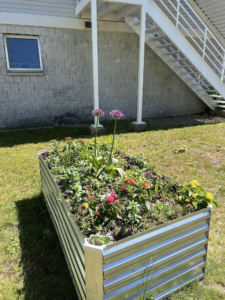 After their installation, our gardens were left to “cook” throughout the winter as rain, snow, and soil microbes broke down the waste into fertile soil. We did not return to the gardens until early spring, when the first snow crocus and allium bulbs were starting to sprout! Once the last frost date had passed, we were able to get to planting! We ordered ten species of native pollinator plants from Prairie Moon Nursery to help bring native pollinators to KC Coombs. These species were chosen because they have staggered bloom times, so there will be flowers for the students to visit from early spring until late fall! Once the native perennials were planted, a second grade STEAM class came out to help us plant annuals around the perimeter of the gardens. The students were able to learn how to properly use gardening tools and transplant small plants from pot to garden. As the summer began and the school year ended, we continued to visit our lasagna gardens every week to keep an eye on their progress and beauty!
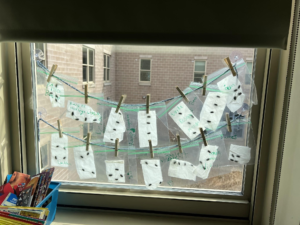
Along with the lasagna garden installation, I also did a series of school visits throughout the fall and winter. My first visits were to KC Coombs and Bournedale Elementary. I taught second grade students more about pollinators, lasagna gardens, and decomposition through the Gilbert the Goldfinch story powerpoint (created by Year 26 AmeriCorps: Kaycee Doherty), worksheets, and hands-on activities. My next school visit was to Lawrence Junior High School in Falmouth, where I taught seventh grade students about cold stratification. Cold stratification is the process in which some native species need their seeds to experience cold temperatures before germination can take place. The students were then able to plant native seeds in small jugs to be cold stratified over the winter and planted in the spring! In order for them to get to know their species, I created plant ID cards that included a photo of what the plant would look like when blooming, the species’ scientific name, how deep to plant the seed, and the preferred light and soil conditions. Later in the school year, I went back to KC Coombs and Bournedale Elementary to teach the second graders about how seeds turn into plants by helping them to grow lima beans in plastic bags in their classrooms. It was such a great experience to teach students about the importance of pollinators, native plants, and gardening!
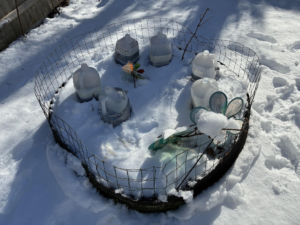
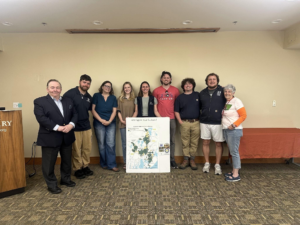 I didn’t just educate young students, either! Throughout the spring and early summer, I created and presented seven adult powerpoint talks. My first presentation was titled “Gardening for a Better Cape: Promoting Pollination and Native Species”, in which I further developed a presentation by last year’s AmeriCorps member Kaycee Doherty. Through this presentation, I educated the audience about types of personal gardens, how to make gardens pollinator-friendly, examples of native plant species and pollinators, seed collection, and how to cold stratify native seeds. I gave this presentation at SouthCape Community Center, the Falmouth Library, and the Mashpee Senior Center. My next presentation took by far the longest to create. “The History of the Mashpee National Wildlife Refuge” presentation gave the audience a look into how the refuge in Mashpee came to be and how it continues to protect local species. Instead of making this presentation strictly information-based, Lucinda and I decided to interview five of the refuge’s founders, two previous partners, and nine current partners to get their personal experiences in working to create and/or continue the refuge’s efforts. It was an amazing experience to learn from so many community members about their work to protect Mashpee’s beautiful natural landscapes and relay that information to audiences at SouthCape Community Center, the Falmouth Library, and the Mashpee Senior Center.
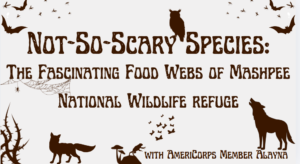 My final presentation was the shortest and only given once at the Mashpee Senior center, but the topic was just as important! This presentation was titled “Not-So-Scary Species: The Fascinating Food Web of Mashpee National Wildlife Refuge” and was a continuation of my Not-So-Scary Species articles that can be found on the Friends’ website. Many people enjoy learning about prominent or “good” species, such as dolphins, butterflies, herring, or migrating birds. However, it is just as important to learn about species that are often considered a nuisance, scary, or “bad”, such as bats, skunks, or poison ivy. While the risks of these species should not be downplayed, my presentation aimed to show that these species do have a beneficial role in the local food-web and ecosystem at large. Environmental education, at any age, is necessary to change perspectives about these kinds of species and promote the desire to protect the local environments that they inhabit.
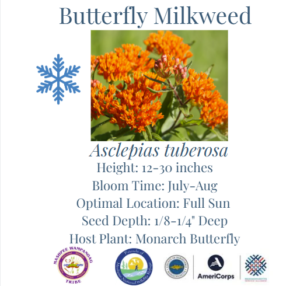 The last major event that I helped with as a FMNWR individual placement was the Mashpee Wampanoag Tribe’s Preserving Our Homelands (POH) camp. The Mashpee tribe does this camp every July to teach their youth about their history, culture, and the environment. Every year, there is a Pollinator Day, where the kids learn about native and culturally significant plants. The campers also get the opportunity to plant these species on their tribal farm to boost the property’s native plant and pollinator populations. As an AmeriCorps member attending this event, I worked with the Friends to create plant species identification cards so that those who walk through the farm can learn about what was planted. These cards also help to organize the farm for future planting projects. During my day at POH camp, I had such a fun time teaching the kids how to plant, explaining how to identify species, and learning more about the Mashpee Wampanoag cultural heritage! After the Pollinator Day, I made a GIS map of where the new pollinator species were planted so that the tribe will have a running record of the species on their property.
I am full of gratitude for all the people I have met, skills I have learned, and experiences I have acquired since starting as a FMNWR individual placement. I would like to thank all of those who aided me through this year, especially the Friends of Mashpee NWR Board of Directors (Glenn Davis, MaryKay Fox, Tania Lewandowski, Thomas Fudala, Neil Barkin, and Katelyn Cadoret), the local teachers (Jamie Vincent: KC Coombs, Caitlin Olsen: Lawrence MS, and Toni Perry: Bournedale Elementary), the Refuge founders (Chuckie Green, Christine Gault, Mark Forest, and Carl Melberg), and the Refuge past and present partners (AD Colburn, Jason Steiding, Dan Kent, Ryan Clark, Henry Torpey, Jim Rassman, Tom Eagle, and Grace Bottitta-Williamson). A special thank you to Lucinda Keith, my supervisor, who helped me to make the best of my year with the Friends and always kept a smile on my face. Most of my projects would not have come to life without her commitment and support! Although I am excited to see where my career takes me, I will miss helping the Friends of the Mashpee Wildlife Refuge in their efforts to protect open space and native species on Cape Cod.