
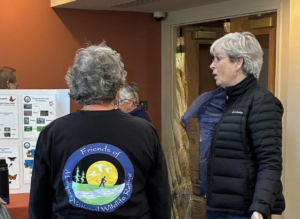
FMNWR AmeriCorps service member Alayna Krempa gave a presentation titled, “Gardening for a Better Cape: Promoting Pollination and Native Species” on April 28th at the Falmouth Library.
Alayna talked about pollination and gave suggestions for a variety of garden options to suit different spaces. She suggested that a container garden would be perfect for small, temporary spaces. If lacking horizontal placement options, a vertical garden would take advantage of walls or shelf additions. For lack of good soil, a raised bed makes a good choice.
The importance of different types of flowering plants was presented by season. Among those Alayna suggested were:
- Spring – Eastern Columbine, Tall White Beardtongue, Golden Alexander and Lupine
- Summer – Leek, Anise Hyssop, Iron Weed, Butterfly Weed, Common Milkwood and Garden Phlox
- Late Boomers into Fall – Spotted Bee Balm, Bottle Gentian, Seaside Goldenrod, Evening Primrose and Northeast Aster.
Pollinators that are attracted to these plants include bees, butterflies, moths, flies and beetles. Other pollination helpers are hummingbirds and bats.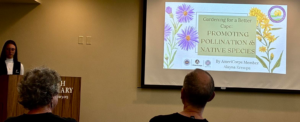
Alayna also stressed the importance of having plants that will flower throughout all the seasons. Some birds and insects, like the butterfly, may migrate more than a hundred of miles each year and need food sources along the way.
There was also discussion about seed collection for the following year. Perennial plants are ready when their seeds fall off easily. It’s best to gather them on a dry, calm day. Some seeds are very tiny and may require tapping to loosen them from their pods, puffs, etc.
An important point to know for good germination is the need for cold stratification for certain plants. Seeds should be wrapped in damp paper towels, placed in plastic bags, and occasionally moved in and out of the refrigerator. This latter action is required to simulate the warming and cooling that occurs naturally outside in the winter.
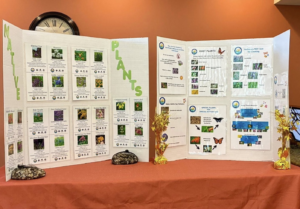
For full details, stay tuned to our events calendar for future dates of this presentation!
For more information on pollinators, visit: