
by Alayna Krempa, 2025-26 AmeriCorps Member
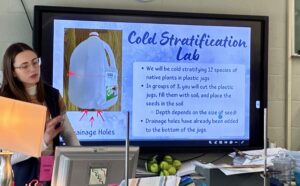 On January 20th, my service partner, Lucinda Keith, and I were welcomed into Ms. Olsen’s classroom at Lawrence Junior High School in Falmouth, MA. Our objective was to educate her seventh grade science classes about cold stratification as a process of germination for native seeds. Prior to the lesson, I had to do some of my own research into this interesting phenomenon. According to the Encyclopedia Britannica, germination is defined as “the sprouting of a seed, spore, or other reproductive body, usually after a period of dormancy”. Depending on where the species is native to, seed germination requires specific conditions, such as light exposure, water absorption, chilling, or warming. These conditions are defined using germination codes, as shown in the Prairie Moon Nursery infographic.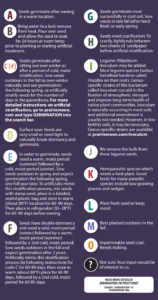
In New England, germination code “C” is common among native plant species, including seaside goldenrod, butterfly milkweed, and blue vervain. For these species, seeds require exposure to cold and damp temperatures to germinate, a process known as cold stratification.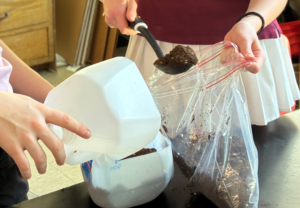
Germination code “C” species have evolved seeds that withstand cold temperatures by ensuring that the seeds will not germinate too early. To accomplish this, seeds possess hard shells that need to be broken down by the cold as well as specific germination hormones that require cold stratification to be released. To successfully grow these species at home, seeds must be planted outdoors in the fall, planted in a container and overwintered, or artificially stratified. Artificial stratification is achieved by wrapping seeds in a damp cloth or paper towel, placing it in a plastic bag, and putting the bag into a refrigerator. The seeds must be monitored and the material replaced until the seeds are ready to sow.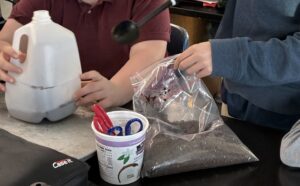
After teaching the seventh graders about cold stratification and its role in seed germination, we gave the students native seeds to plant using the container method. Each group received a plastic water jug with drainage holes cut into the bottom. The students cut the jugs in half, leaving the handle attached to create a hinge. They then filled the bottom half with potting soil and wet the soil with water until it drained through the holes. Each group got a packet of seeds from one native species. The seeds were generously donated to us by Cara Lawrence, who collected them from her own garden of native plants. The students were instructed to place the seeds into the soil at the proper depth for that species. Once the seeds were planted, the students closed the jug and taped around the opening that they had cut. The top of the jugs were left open to allow for air flow, light, and precipitation. To finish their cold stratification greenhouses, the seventh graders labeled their jugs with the proper species.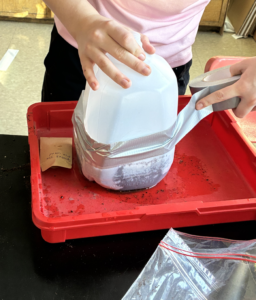
Overall, the cold stratification lesson and lab with the Lawrence students was a great success. The two classes of seventh grade were able to plant twelve species of native pollinator seeds! In the spring, Lucinda and I will return to Lawrence Junior High School with the jugs and their cold stratified seeds. If everything goes to plan, we will have many germinated native seedlings to replant into pots to go in the school’s greenhouse. Once the seedlings grow large enough, they will make the Lawrence pollinator garden even more diverse! Until then, the jugs will stay outdoors in protected garden beds so that the seeds have the rest of the winter to prepare for germination.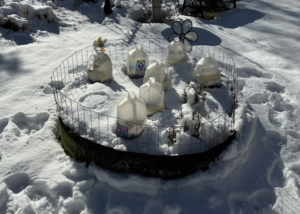
A huge thank you to everyone who helped with this project, including Lucinda Keith, MaryKay Fox, Cara Lawrence, Tania Lewandowski, Ms. Caitlin Olsen, and the Lawrence seventh graders! If you are interested in learning more about seed germination, Prairie Moon Nursery’s website is a great resource for all things native plants. Stay tuned to the Friends of Mashpee National Wildlife Refuge website for more updates about my AmeriCorps service year projects!